


A high-tech enterprise focusing on the R&D, production, and sales of bio-fermentation equipment
Blog
How to manage edible fungi fermenters?
Release Time:
2022-01-13
Edible fungi fermenter, its inoculation time is 1/10 of that of solid culture, and there is no contamination. There is simply no chance for microbial contamination. In addition, the mycelium age of the mushroom bag is consistent, the fruiting bodies emerge uniformly, and the yield is high. All operations are automated, and can be completed with a simple button press. Having understood the advantages, let's take a look at its application scope.
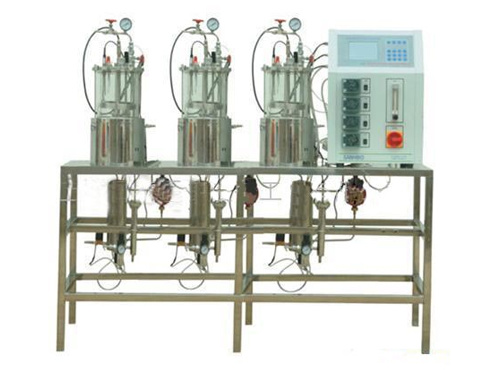
It is mainly used in the research, production, inoculation of liquid strains, and large-scale production in factories, and is also used in the cultivation of various microorganisms, the production of foods containing active ingredients of edible fungi, and the production of active factors in various dairy products. Therefore, its application range is very wide, usually in the mycelium.
Steam should be used to sterilize the air filter connected to the bioreactor, and air should be used for drying. Simultaneously with the sterilization of the tank, wastewater in the transport pipeline should be drained and flushed. Then, the prepared culture medium is pumped into the fermenter, and the stirrer is started for sterilization. Sterilization of the bioreactor: First, open all the exhaust valves, introduce steam into the jacket or coil for preheating. When the tank temperature rises to 80~90℃, gradually close the exhaust valves after removing them.
Latest News

2026 Ultimate Guide to Production-Type Fermentation Equipment: Selection, Use & ROI
2026-11-13
This 2026 guide is built for biomanufacturing, food fermentation and industrial biotech teams evaluating production-scale fermentation systems. We integrate real operational data from MIKEBIO’s global client deployments to cover core equipment components, selection frameworks, regulatory compliance checks, maintenance best practices and total cost of ownership calculations. Readers will learn to avoid common procurement mistakes, optimize production yield and select equipment aligned with long-term scaling goals without overspending on unnecessary features.

Production-Type Fermentation Equipment: 2026 Buyer’s & Operations Playbook
2026-11-12
This comprehensive 2026 guide is built for bioprocess engineers, manufacturing operations leaders, and lab managers evaluating production-type fermentation equipment for commercial-scale output. It breaks down core system components, step-by-step deployment validation, measurable performance benchmarks, common operational pitfalls, and cost optimization strategies, with balanced, evidence-based insights from real client implementations across biopharma, industrial biotech, and fermented food sectors.

2026-11-11
This 2026 authoritative guide draws on MIKEBIO’s 12+ years of hands-on deployment experience across 400+ industrial fermentation facilities to break down core selection criteria, compliance requirements, performance benchmarks, and long-term maintenance best practices for production-type fermentation equipment. We cover common pain points from scalability gaps to contamination risks, share peer-validated ROI calculations, and answer top buyer questions to reduce procurement risk and cut unplanned downtime for biomanufacturing teams.

2026 Guide to Production-Type Fermentation Equipment: Selection, Design & ROI Optimization
2026-11-10
This evidence-based 2026 guide breaks down production-type fermentation equipment for biomanufacturing teams, covering core design parameters, regulatory compliance, selection workflows, common maintenance pain points, and long-term ROI optimization. Drawing from MIKEBIO’s 18 years of hands-on fermentation system deployment across 47 countries, the content includes side-by-side component comparisons, step-by-step capacity validation checks, and actionable fixes for 90% of common scale-up failures. The guide helps engineering teams cut unplanned downtime by 30% while meeting 2026 biopharma and food-grade production audit requirements.

Contact: Manager Sun 18005282900
Contact: Manager Xu 18061190011
Company phone: 0511-85936307
Email:lk@mikebio.com
Website: www.mikebio.com

WeChat Official Account