

A high-tech enterprise focusing on the R&D, production, and sales of bio-fermentation equipment
Blog
Liquid fermentation tank manufacturers introduce the cooling system of the fermentation tank
Release Time:
2021-08-18
Liquid fermenter manufacturers introduce the cooling system of the fermenter.
Liquid fermenter manufacturer: Fermenter uses industrial chiller for cooling.
The methods for cooling these chambers differ from the fermentation vessel itself; these freezing methods can be performed from both internal and external directions.
Internal Cooling
Some fermentation cooling devices require the insertion of cooling rods or coils into the fermentation broth. These devices cool the fermentation vessel internally through direct contact with the coolant. This increases the risk of contamination if tools and equipment are inserted into the fermentation broth, potentially introducing unwanted microorganisms such as wild yeasts that could alter your brew and contaminate your beverage. Opening the fermentation chamber to insert cooling devices also increases the risk of oxidation.
Even with this cooling method, cooling efficiency is significantly reduced. The fermentation broth is exposed to a smaller cooling surface area, resulting in poorer cooling. This is especially true with large volumes of fermentation broth, increasing the risk of hot and cold spots developing within the broth, hindering the yeast's ability to complete the fermentation process.
External Cooling
External cooling of the fermentation chamber is the most effective method. Regardless of the fermenter's diameter, the external surface area is always greater than the internal cooling surface. Direct contact between the cooling source and the fermentation vessel is best. Because the heat flow from the vessel to the cooler is uniform, fermenters come in various shapes and sizes. Therefore, to ensure complete contact with the vessel, the cooling source must be as flexible as possible.
Coolant
A fermentation cooling jacket completely surrounding the fermenter provides the most direct cooling contact. Insulated magnetic flux jackets from our company's chillers have multiple coolant channels evenly distributed around the fermentation chamber. This temperature regulation eliminates hot and cold spots, maintaining optimal conditions for yeast and fermentation. Air-cooled chillers are easy to install, require no opening of the fermentation vessel, and are flexible enough to accommodate various vessel shapes and sizes.
Liquid fermenter manufacturer: How to best mix materials in a fermenter
By mechanically stirring the materials in the fermenter, axial and radial flow is generated, ensuring good mixing within the tank and keeping solid substances suspended in the liquid. This facilitates full contact between solids and nutrients, improving nutrient absorption. Simultaneously, it breaks up bubbles, increasing the gas-liquid contact area, improving the gas-liquid transfer rate, enhancing oxygen transfer, and eliminating bubbles. Sterile air needs to be introduced to maintain oxygen for the microorganisms, meeting the needs of aerobic bacteria for growth and fermentation.
The structure of the fermenter utilizes the rapid rotation of the rotor immersed in the fermentation broth. Due to centrifugal force, the liquid and air move towards the outer edge, and the pressure near the rotor gradually increases. As the rotor speed increases, air from outside the fermenter is continuously drawn in through a filter due to the gap between the rotor and the atmosphere, quickly flung towards the outer edge of the impeller. The anisotropic impeller then evenly distributes the gas-liquid mixture. This stirring creates a strong mixing flow around the impeller, breaking up air bubbles and ensuring thorough gas-liquid mixing.
Through the above introduction, we have gained a new understanding of fermenters. If you have any further questions, please contact our liquid fermenter manufacturer. We wish you a pleasant day!
Latest News

2025-07-28
The 15th Shanghai International Bio-fermentation Products and Technology Equipment Exhibition 2025 will be grandly held at the Shanghai New International Expo Center from August 7th to 9th.
How can the fermentation system be upgraded?
2022-05-13
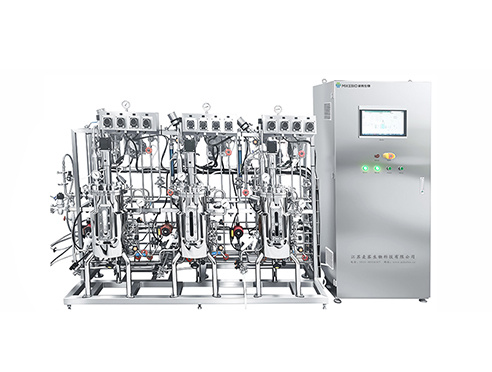
Fermentation systems are commonly used in research, production, seed production, and large-scale factory production units for liquid strains. They are also used in the cultivation of various microorganisms, the production of food containing edible fungal active ingredients, and the production of active factors in various dairy products. Therefore, its application range is very wide, commonly used in mycelia.
What are the disadvantages of laboratory fermenters?
2022-04-27
Laboratory fermenters are mainly used in research, production, seed production, and large-scale production units of liquid strains, and are also used in the cultivation of various microorganisms, the production of food containing edible fungus active ingredients, and the production of active factors in various dairy products. Therefore, its application range is very wide, usually in mycelia.
How is the fermentation system managed?
2022-04-21
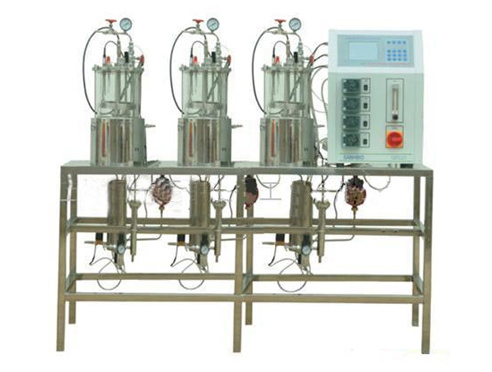
Fermentation systems are used in the production of food and various dairy products' active factors, so their application is very widespread. Commonly used in mycelia, extracting bioactive ingredients to produce various food additives, extracting bioactive ingredients to produce various food additives, in microbial engineering it is used to produce pesticides, pharmaceuticals, hormones, etc., suitable for scientific research units, and mushroom companies.

Contact: Manager Sun 18005282900
Contact: Manager Xu 18061190011
Company phone: 0511-85936307
Email:lk@mikebio.com
Website: www.mikebio.com

WeChat Official Account