


A high-tech enterprise focusing on the R&D, production, and sales of bio-fermentation equipment
Blog
Liquid fermentation tank manufacturers introduce the current development situation of fermentation tanks
Release Time:
2021-08-21
Liquid fermentation tank manufacturers introduce the current market situation of fermentation tanks
Under the stable fermentation tank market, three new development directions are emerging
Fermentation refers to the accumulation of a large number of metabolic products needed by people through the life activities of microorganisms under aerobic or anaerobic conditions. Our daily diet uses fermentation technologies such as wine, soy sauce, and yogurt. The fermentation tank is one of the main equipment in fermentation. With the development of the fermentation industry, the performance of fermentation tanks has been greatly improved. In the future, market competition in the fermentation industry will further intensify, and technological innovation is the fundamental means of breaking through.
As an important tool in fermentation, the fermentation tank has very high requirements for pure strain cultivation. Therefore, the fermentation tank needs a strict structure, good heat transfer speed and liquid mixing function, reliable auxiliary detection, instrument control, etc. Although fermentation tanks appeared as early as the 20th century, it was found that the initial fermentation tanks were only equipped with simple temperature measurement and heat exchange equipment.
After the 20th century, liquid deep fermentation technology began to emerge, and a series of technologies such as pure-blood sterile culture, mechanical stirring, fermentation process detection and control began to be improved. After the 1960s, the volume of fermentation tanks increased, and the types of equipment also became richer. Computer and other technologies have been widely used. At present, with the in-depth research of bioengineering, the market scale of fermentation tanks continues to expand, and the technology is constantly improving.
Overall, the fermentation equipment currently on the market can be mainly divided into the following categories: According to the operating characteristics of the equipment, it can be divided into mechanically stirred and aerated fermentation tanks and non-mechanically stirred and aerated fermentation tanks; according to the microbial fermentation method, it can be divided into aerobic fermentation tanks and anaerobic fermentation tanks; according to the equipment volume, it can be divided into laboratory fermentation tanks, medium-sized fermentation tanks, and large-sized fermentation tanks.
Liquid fermentation tank manufacturer: With the rapid development of the fermentation industry, while bringing many market opportunities to fermentation tanks, it has also put forward higher requirements for equipment performance. At present, the development trend of fermentation tanks is mainly divided into three aspects: large-scale, continuous, and intelligent.
1. Large-scale: Large-scale fermentation tanks help improve labor productivity, increase output, and reduce costs. In order to produce large-scale fermentation equipment, relevant equipment manufacturers need to focus on the development of scaling-up technology and pollution prevention technology. As part of fermentation, it is necessary to avoid difficult-to-control and pollution.
2. Continuous: Continuous fermentation equipment can stabilize the quality of fermentation products, greatly reduce the cleaning, input, and disinfection time, improve work efficiency, and save labor and time costs. In addition, it can also reduce the equipment footprint and facilitate equipment mechanization and automated control.
3. Intelligent: The combination of intelligent core equipment and fermentation tanks can realize real-time monitoring and data acquisition of the entire process from raw material addition to the end of fermentation, and realize the integrated control of the fermentation process. It is reported that a certain soy sauce company uses an advanced data acquisition system combined with more than 2,000 sensors to automatically monitor, diagnose, and optimize the fermentation process. At present, China's fermentation industry is developing rapidly, and the performance and production technology of fermentation tanks have made great progress. With the intensification of market competition for fermentation tanks, relevant equipment manufacturers must find new breakthroughs, innovate based on traditional fermentation technology, and use large-scale, continuous, and intelligent as new "indicators" for equipment upgrades to further expand market development space.
The liquid fermentation tank manufacturer introduces it here. If you need it, remember to contact our liquid fermentation tank manufacturer. Okay, I wish you a happy life!
Latest News
2025-07-28
The 15th Shanghai International Bio-fermentation Products and Technology Equipment Exhibition 2025 will be grandly held at the Shanghai New International Expo Center from August 7th to 9th.
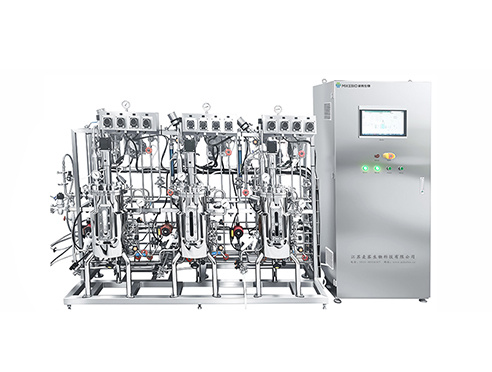
How can the fermentation system be upgraded?
2022-05-13
Fermentation systems are commonly used in research, production, seed production, and large-scale factory production units for liquid strains. They are also used in the cultivation of various microorganisms, the production of food containing edible fungal active ingredients, and the production of active factors in various dairy products. Therefore, its application range is very wide, commonly used in mycelia.
What are the disadvantages of laboratory fermenters?
2022-04-27
Laboratory fermenters are mainly used in research, production, seed production, and large-scale production units of liquid strains, and are also used in the cultivation of various microorganisms, the production of food containing edible fungus active ingredients, and the production of active factors in various dairy products. Therefore, its application range is very wide, usually in mycelia.
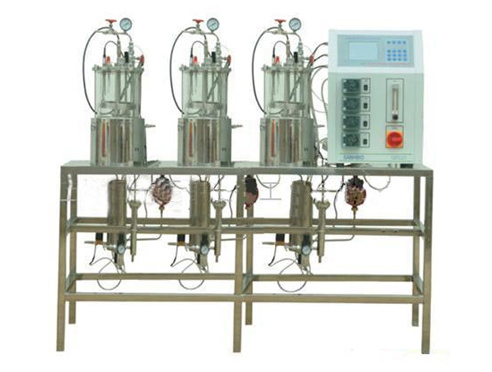
How is the fermentation system managed?
2022-04-21
Fermentation systems are used in the production of food and various dairy products' active factors, so their application is very widespread. Commonly used in mycelia, extracting bioactive ingredients to produce various food additives, extracting bioactive ingredients to produce various food additives, in microbial engineering it is used to produce pesticides, pharmaceuticals, hormones, etc., suitable for scientific research units, and mushroom companies.

Contact: Manager Sun 18005282900
Contact: Manager Xu 18061190011
Company phone: 0511-85936307
Email:lk@mikebio.com
Website: www.mikebio.com

WeChat Official Account