


A high-tech enterprise focusing on the R&D, production, and sales of bio-fermentation equipment
Blog
What principles are used in the design of stainless steel fermenters?
Release Time:
2021-08-25
Because the rotor's space in the stainless steel fermenter is open to the atmosphere, the air outside the fermenter is continuously drawn in through a filter, quickly flung towards the outer edge of the impeller, and then evenly distributed by the anisotropic impeller to create a thorough mixing of gas and liquid. This creates an intense mixing flow around the impeller, breaking up air bubbles and ensuring thorough gas-liquid mixing.

The fermentation cooling jacket completely surrounding the fermenter provides the most direct cooling contact. The mechanical agitation of the material within the fermenter creates axial and radial movement, resulting in excellent mixing of the material inside the tank. This keeps solid substances suspended in the liquid, facilitating thorough contact between solids and nutrients for better nutrient absorption. Simultaneously, it breaks up bubbles, increasing the gas-liquid contact area and improving the transfer rate between gas and liquid.
The insulated magnetic flux jacket from our company's chiller unit has multiple coolant channels evenly distributed around the fermentation chamber. This temperature control range eliminates hot and cold spots, maintaining optimal yeast conditions and fermentation. The air-cooled chiller is easy to install, requiring no opening of the fermentation vessel. It can adapt flexibly to various vessel shapes and sizes, improving oxygen transfer, eliminating bubbles, and ensuring the supply of sterile air to maintain oxygen levels for the microorganisms. This satisfies the growth and fermentation needs of aerobic bacteria. The fermenter's structure utilizes the rapid rotation of the rotor immersed in the fermentation broth. Due to centrifugal force, the liquid and air move towards the outer edge, and the pressure near the rotor gradually increases, thus increasing the rotational speed of the fermenter rotor.
Latest News

2025-07-28
The 15th Shanghai International Bio-fermentation Products and Technology Equipment Exhibition 2025 will be grandly held at the Shanghai New International Expo Center from August 7th to 9th.
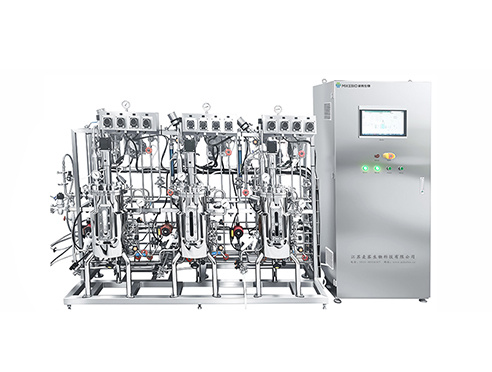
How can the fermentation system be upgraded?
2022-05-13
Fermentation systems are commonly used in research, production, seed production, and large-scale factory production units for liquid strains. They are also used in the cultivation of various microorganisms, the production of food containing edible fungal active ingredients, and the production of active factors in various dairy products. Therefore, its application range is very wide, commonly used in mycelia.
What are the disadvantages of laboratory fermenters?
2022-04-27
Laboratory fermenters are mainly used in research, production, seed production, and large-scale production units of liquid strains, and are also used in the cultivation of various microorganisms, the production of food containing edible fungus active ingredients, and the production of active factors in various dairy products. Therefore, its application range is very wide, usually in mycelia.
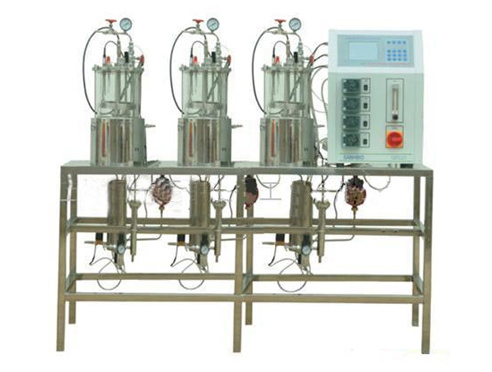
How is the fermentation system managed?
2022-04-21
Fermentation systems are used in the production of food and various dairy products' active factors, so their application is very widespread. Commonly used in mycelia, extracting bioactive ingredients to produce various food additives, extracting bioactive ingredients to produce various food additives, in microbial engineering it is used to produce pesticides, pharmaceuticals, hormones, etc., suitable for scientific research units, and mushroom companies.

Contact: Manager Sun 18005282900
Contact: Manager Xu 18061190011
Company phone: 0511-85936307
Email:lk@mikebio.com
Website: www.mikebio.com

WeChat Official Account