


A high-tech enterprise focusing on the R&D, production, and sales of bio-fermentation equipment
Blog
How can the fermentation system be upgraded?
Release Time:
2021-09-01
The use of water in the fermentation system is to promote the transformation of organic pollutants and prevent the accumulation of harmful substances by using photosynthetic bacteria in the fertilization water. Then, by adjusting the light, most photosynthetic bacteria use near-infrared light of 700-900 nanometers, which can be satisfied by ordinary light bulbs of 25-60 watts. Different light intensities and different strain requirements are generally adjusted by controlling the distance between the bulb and the strain level, generally controlled at 15-25cm. Of course, sunlight is the best, cost-free, improves the water environment, adds biological bait, and when the water body is thin, fertilize first to improve the water quality, then apply photosynthetic bacteria, which is conducive to maintaining the vitality and propagation advantage of photosynthetic bacteria in the water body, and reducing the cost of use. 
In addition, when the pond water is acidic, slaked lime should be used to adjust the pH value to 7.0-8.0, and then photosynthetic bacteria should be added. The main process of bacterial fermenter manufacturing is stirring. In the cultivation of photosynthetic bacteria, keeping the bacterial solution dynamic is conducive to bacterial cells floating to obtain light and promoting excellent growth of bacterial cells. Practice has proved that the concentration of dynamically cultured bacterial solution is higher than that of statically cultured bacterial solution. Generally, artificial periodic stirring or sealed circulation pump is used to make the culture solution slowly circulate. The temperature is generally adjusted. The optimal cultivation temperature range of the strain is 25-34 (the habit range is 15-40). When the temperature is lower than 15%C, the growth is slow, the color of the bacterial solution becomes darker, and the sedimentation increases. Then, measure the pH value, because bacteria have to use organic acids in the culture solution during the cultivation process, which leads to the increase of pH value. Finally, when the content of photosynthetic bacteria is high, it can also release bacteriostatic enzymes to inhibit the growth of some miscellaneous bacteria. Practice has proved that the normal inoculation amount of productive cultivation should not be lower than 1:5, that is, 1 strain (3 billion level) and 5 kinds of culture solution; when the inoculation conditions are poor.
The inoculation amount should not be less than 1:1. Selecting suitable culture medium is also an important measure to maintain the number advantage. Therefore, the pH value should be measured at least once or twice a day. At the beginning, it can be measured once a day, and then added once in the next few days. Then, in the biological control of pests and enemies, the main preventive measures are to select clean water and strictly disinfect, select high-quality strains, and age photosynthetic bacteria with poor activity and many harmful metabolic products in the bacterial solution. Then, select strains with high concentration, strong activity, few miscellaneous bacteria, and bright purplish red bacterial solution, and inoculate them in an advantageous way to maintain the number advantage. In large-scale production, because mixed bacteria in water sources, containers and air cannot be eliminated, the inoculation amount should be increased to make photosynthetic bacteria have an absolute advantage, so as to cultivate high-quality bacterial solution.
Latest News

2025-07-28
The 15th Shanghai International Bio-fermentation Products and Technology Equipment Exhibition 2025 will be grandly held at the Shanghai New International Expo Center from August 7th to 9th.
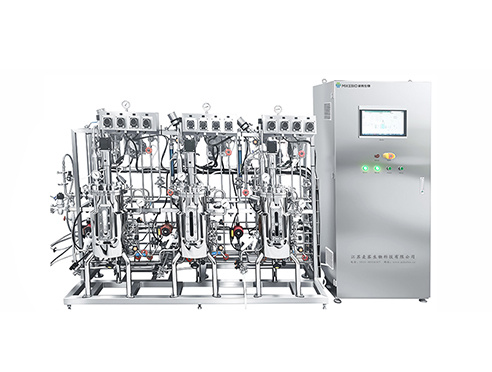
How can the fermentation system be upgraded?
2022-05-13
Fermentation systems are commonly used in research, production, seed production, and large-scale factory production units for liquid strains. They are also used in the cultivation of various microorganisms, the production of food containing edible fungal active ingredients, and the production of active factors in various dairy products. Therefore, its application range is very wide, commonly used in mycelia.
What are the disadvantages of laboratory fermenters?
2022-04-27
Laboratory fermenters are mainly used in research, production, seed production, and large-scale production units of liquid strains, and are also used in the cultivation of various microorganisms, the production of food containing edible fungus active ingredients, and the production of active factors in various dairy products. Therefore, its application range is very wide, usually in mycelia.
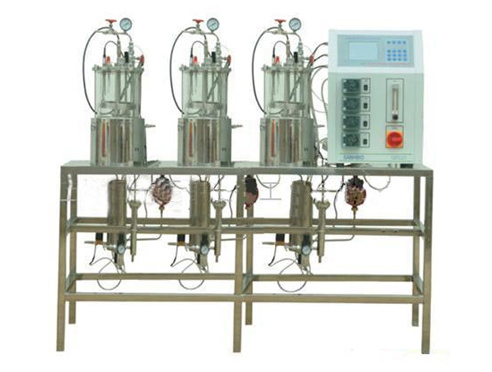
How is the fermentation system managed?
2022-04-21
Fermentation systems are used in the production of food and various dairy products' active factors, so their application is very widespread. Commonly used in mycelia, extracting bioactive ingredients to produce various food additives, extracting bioactive ingredients to produce various food additives, in microbial engineering it is used to produce pesticides, pharmaceuticals, hormones, etc., suitable for scientific research units, and mushroom companies.

Contact: Manager Sun 18005282900
Contact: Manager Xu 18061190011
Company phone: 0511-85936307
Email:lk@mikebio.com
Website: www.mikebio.com

WeChat Official Account