


A high-tech enterprise focusing on the R&D, production, and sales of bio-fermentation equipment
Blog
How can fermentation equipment be upgraded?
Release Time:
2021-10-16
Batch fermentation of fermentation equipment: This method refers to a fermentation method in which fresh medium is added intermittently or continuously during batch fermentation. Auxiliary materials can be all materials, such as nitrogen sources and carbon sources, which will extend the synthesis time of metabolites, etc. This method increases the production efficiency of penicillin by 20%, acknowledging that all valves of the laboratory fermenter are closed.

Open the steam generator inlet valve and start the steam generator. First, the steam generator will automatically add water. At this time, open the bottom drain valve and try to remove the rust on the steam generator. Then close the drain valve and pay attention to the water level of the steam generator to avoid turbulence. At this moment, fully open the jacket outlet valve, slowly open the steam generator main valve, and slowly open the jacket inlet valve to start the flow of steam into the jacket. At the beginning, the steam pressure is unstable, and the pressure gauge pointer may vibrate violently. Before opening the sampling valve and steam outlet, and the sampling valve and steam inlet, the jacket inlet valve can be properly closed. The sampling valve and the lower valve are both disinfected, and the unstable water vapor is discharged at the same time.
Continuous fermentation: This method is related to a fermentation method, which continuously discharges the old medium and continuously adds the medium to the laboratory fermenter. It has the advantages of high equipment utilization rate, stable product quality, and easy automatic control. Its disadvantage is that it is easy to contaminate other bacteria. This technology has been used in the production of yeast cells, ethanol, lactic acid, butanol, petroleum dewaxing, and wastewater treatment.
Latest News

2025-07-28
The 15th Shanghai International Bio-fermentation Products and Technology Equipment Exhibition 2025 will be grandly held at the Shanghai New International Expo Center from August 7th to 9th.
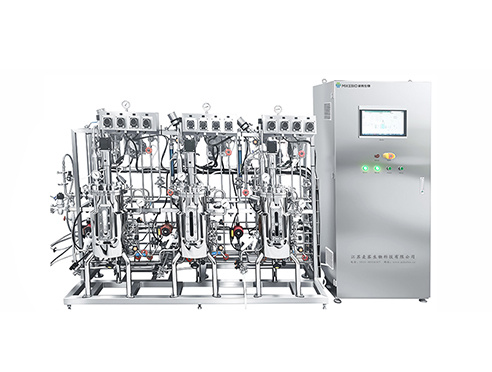
How can the fermentation system be upgraded?
2022-05-13
Fermentation systems are commonly used in research, production, seed production, and large-scale factory production units for liquid strains. They are also used in the cultivation of various microorganisms, the production of food containing edible fungal active ingredients, and the production of active factors in various dairy products. Therefore, its application range is very wide, commonly used in mycelia.
What are the disadvantages of laboratory fermenters?
2022-04-27
Laboratory fermenters are mainly used in research, production, seed production, and large-scale production units of liquid strains, and are also used in the cultivation of various microorganisms, the production of food containing edible fungus active ingredients, and the production of active factors in various dairy products. Therefore, its application range is very wide, usually in mycelia.
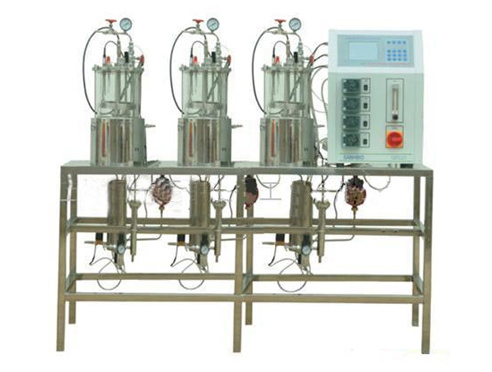
How is the fermentation system managed?
2022-04-21
Fermentation systems are used in the production of food and various dairy products' active factors, so their application is very widespread. Commonly used in mycelia, extracting bioactive ingredients to produce various food additives, extracting bioactive ingredients to produce various food additives, in microbial engineering it is used to produce pesticides, pharmaceuticals, hormones, etc., suitable for scientific research units, and mushroom companies.

Contact: Manager Sun 18005282900
Contact: Manager Xu 18061190011
Company phone: 0511-85936307
Email:lk@mikebio.com
Website: www.mikebio.com

WeChat Official Account