


A high-tech enterprise focusing on the R&D, production, and sales of bio-fermentation equipment
Blog
Will the liquid fermenter break?
Release Time:
2021-12-01
Compared with traditional fermenters, liquid fermenters have much larger gas and liquid flow rates. Bioreactors have high aeration efficiency, and the aeration in the tube can be greater than that in the bubble reactor, which is beneficial for aerobic reactions; the fluidization effect allows solid particles, even heavier ones, to remain completely suspended before sterilization of the bioreactor. 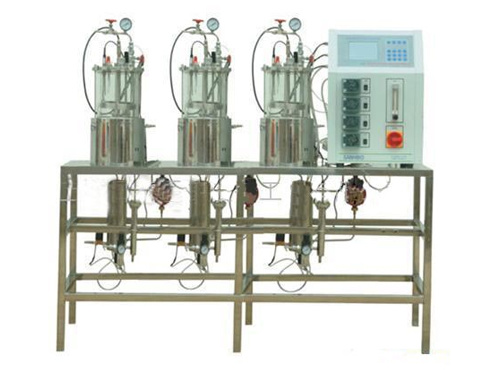
Its seed preparation time is 1/10 that of solids, and there is no contamination; there is almost no chance of microbial infection. In addition, the upper and lower mycelial ages of its spore bags are consistent, resulting in uniform fruiting body emergence, high yield, and automated operation. Simply pressing buttons completes the process. Having understood these advantages, let's look at its application areas. It is mainly used in the research, production, seed preparation of liquid strains, and large-scale production units in factories.
It is also used in the cultivation of various microorganisms, the production of foods containing edible fungus active ingredients, and the production of active factors in various dairy products. Therefore, its application scope is very wide. For mycelia, steam should be used to sterilize the air filter connected to the bioreactor, and air should be used for drying. Simultaneously with the actual tank sterilization, wastewater in the transport pipeline should be discharged and flushed. Then, the prepared culture medium is pumped into the fermenter, and the stirrer is started for sterilization. Bioreactor sterilization: First, open all exhaust valves, introduce steam into the jacket or coil for preheating. When the tank temperature rises to 80-90°C, remove the exhaust valve and gradually close it.
Latest News

2026 Ultimate Guide to Production-Type Fermentation Equipment: Selection, Use & ROI
2026-11-13
This 2026 guide is built for biomanufacturing, food fermentation and industrial biotech teams evaluating production-scale fermentation systems. We integrate real operational data from MIKEBIO’s global client deployments to cover core equipment components, selection frameworks, regulatory compliance checks, maintenance best practices and total cost of ownership calculations. Readers will learn to avoid common procurement mistakes, optimize production yield and select equipment aligned with long-term scaling goals without overspending on unnecessary features.

Production-Type Fermentation Equipment: 2026 Buyer’s & Operations Playbook
2026-11-12
This comprehensive 2026 guide is built for bioprocess engineers, manufacturing operations leaders, and lab managers evaluating production-type fermentation equipment for commercial-scale output. It breaks down core system components, step-by-step deployment validation, measurable performance benchmarks, common operational pitfalls, and cost optimization strategies, with balanced, evidence-based insights from real client implementations across biopharma, industrial biotech, and fermented food sectors.

2026-11-11
This 2026 authoritative guide draws on MIKEBIO’s 12+ years of hands-on deployment experience across 400+ industrial fermentation facilities to break down core selection criteria, compliance requirements, performance benchmarks, and long-term maintenance best practices for production-type fermentation equipment. We cover common pain points from scalability gaps to contamination risks, share peer-validated ROI calculations, and answer top buyer questions to reduce procurement risk and cut unplanned downtime for biomanufacturing teams.

2026 Guide to Production-Type Fermentation Equipment: Selection, Design & ROI Optimization
2026-11-10
This evidence-based 2026 guide breaks down production-type fermentation equipment for biomanufacturing teams, covering core design parameters, regulatory compliance, selection workflows, common maintenance pain points, and long-term ROI optimization. Drawing from MIKEBIO’s 18 years of hands-on fermentation system deployment across 47 countries, the content includes side-by-side component comparisons, step-by-step capacity validation checks, and actionable fixes for 90% of common scale-up failures. The guide helps engineering teams cut unplanned downtime by 30% while meeting 2026 biopharma and food-grade production audit requirements.

Contact: Manager Sun 18005282900
Contact: Manager Xu 18061190011
Company phone: 0511-85936307
Email:lk@mikebio.com
Website: www.mikebio.com

WeChat Official Account